
WELCOME TO WIJARA!
Your child’s first WIJARA race weekend is an exciting milestone. It’s also likely to be a little overwhelming.
Hundreds of young ski racers. Multiple racecourses. Coaches moving between start areas. Parents carrying backpacks, skis, boots, and enough winter clothing to survive an expedition to Antarctica.
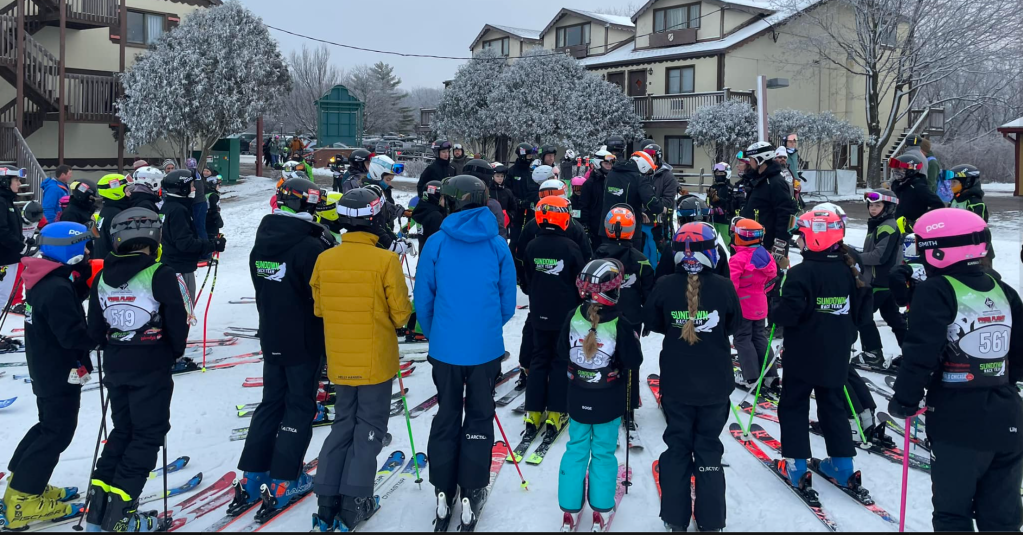
And somewhere in the middle of all that activity is your child, preparing to push out of a starting gate.
Welcome to junior alpine ski racing!
At Sundown Race Team (SRT), we want your family’s first race weekend to be a positive experience. This guide will help you understand how WIJARA competitions operate, what you should bring, where you need to be, and what to expect throughout the weekend.
Most importantly, we want you to understand that your child’s first race isn’t about winning.
It’s about learning, developing confidence, making friends, and discovering the excitement of competitive skiing.
1 | WHAT IS WIJARA?
WIJARA stands for the Wisconsin Illinois Iowa Junior Alpine Racing Association.
The league brings together junior alpine ski racing programs from across the region for a series of winter competitions.
WIJARA provides a competitive environment for young athletes of varying ages and experience levels, from first-year racers to experienced teenagers.
Unlike some higher-level racing programs, WIJARA offers a relatively accessible introduction to organized alpine competition.
For SRT athletes, WIJARA weekends are an opportunity to apply the skills they’ve been developing during practices.
It’s where training meets competition.
And where teammates become an important part of the experience.
2 | UNDERSTANDING THE RACE WEEKEND
WIJARA competitions generally take place over two days.
SATURDAY — GIANT SLALOM (GS)
Giant Slalom involves a series of gates arranged down the racecourse.
The gates are spaced farther apart than in Slalom, allowing athletes to develop speed while demonstrating their turning skills, balance, and control.
Depending on the event format, athletes may compete in multiple GS runs or races throughout the day.
SUNDAY — SLALOM (SL)
Slalom involves gates positioned closer together, requiring quicker turns, precise movements, and rapid changes in direction.
Slalom can be particularly entertaining for spectators.
It also presents a new set of challenges for developing racers.
Missing a gate is common, particularly among younger competitors.
Learning to recognize mistakes, recover appropriately, and continue developing is part of the experience.
Remember: Every successful ski racer has missed gates, fallen, and been disqualified.
Those experiences are part of learning to race.
3 | PREPARING FOR THE WEEKEND
Preparation begins several days before the competition.
Each host resort publishes a race fact sheet containing important information, including race schedules, course inspection times, lift tickets, parking, and volunteer assignments.
SRT WIJARA Morning Meetings Varies between 7:30 AM and 8:10 AM. Plan on arriving at the hill between 7:00 AM and 7:15 AM.
Parents should review this information before traveling.
CHECK YOUR RACER’S EQUIPMENT
Make sure your child has:
- Properly fitted ski boots.
- Race skis that are tuned and ready.
- Ski poles.
- An approved, properly fitted racing helmet.
- Goggles appropriate for the conditions.
- Gloves or mittens.
- Hand & Toe Warmers are highly recommended.
- Warm layers and waterproof outerwear.
- Any discipline-specific equipment required for their age group.
- Two-Way Radios are highly recommened.
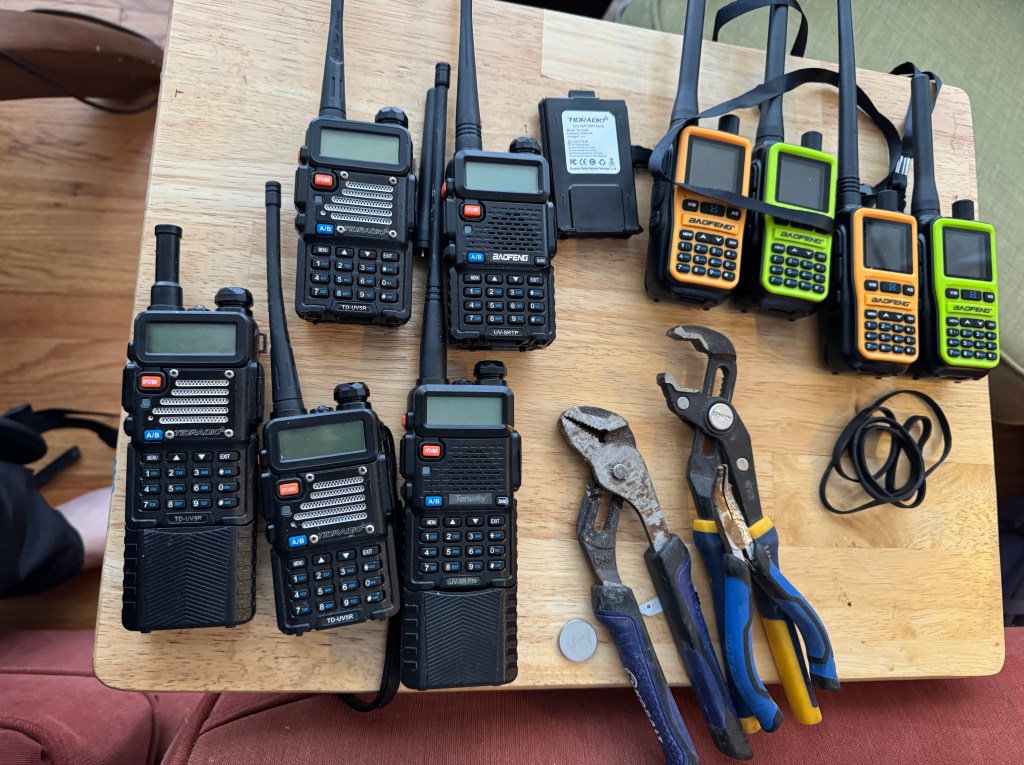
If your child uses different equipment for Giant Slalom and Slalom, make sure everything is packed.
A forgotten boot, helmet, or pair of skis can make for a very difficult morning.
PACK FOR THE WEATHER — AND THEN SOME
WIJARA weekends are held in the Midwest during January and February.
Conditions can range from relatively mild temperatures to bitter cold, high winds, and snowfall.
Athletes spend considerable time outside, including periods when they aren’t actively racing.
Extra gloves, dry socks, warm jackets, and face protection can make an enormous difference.
Parents should prepare themselves for prolonged periods outdoors as well.
4 | RACE MORNING — ARRIVE EARLY!
One of the biggest mistakes new racing families make is underestimating how much time is needed before the first race.
Plan to arrive approximately 60–90 minutes before your child’s scheduled course inspection, unless coaches provide different instructions.
Arriving early allows time to:
- Park and unload equipment.
- Obtain lift tickets and complete any required paperwork.
- Find the SRT team meeting location.
- Get your child dressed and organized.
- Meet the coaches.
- Reach the race hill for course inspection.
Course inspection is an important part of the racing process.
Athletes accompany their coaches through the racecourse to become familiar with its layout, terrain, gate combinations, and potential challenges.
Missing course inspection can mean missing an essential part of race preparation.
Please make every effort to have your racer ready at the designated meeting time.
5 | UNDERSTANDING THE START ORDER
One of the most confusing aspects of a first WIJARA weekend is understanding when your child will actually race.
Athletes compete in age classifications, generally separated by gender.
The start order identifies the sequence in which racers will leave the starting gate.
Your child’s bib number does not necessarily indicate their starting position.
Parents should obtain the official start order before racing begins.
Keep a copy accessible on your phone or in your pocket.
This will help you estimate when your child needs to report to the start area and when you should be watching from the finish.
IMPORTANT FOR YOUNGER RACERS
Young children often have difficulty judging how much time remains before their race.
Parents should help them stay aware of the schedule.
However, once your child reaches the start area, please allow the coaches and race officials to manage the process.
6 | WHAT HAPPENS BETWEEN RACES?
Here’s something that often surprises first-time racing parents:
There can be a considerable amount of waiting during a ski race.
WIJARA events involve many athletes, and each competitor must complete the course before the next stages of competition can proceed.
Between runs, racers may have time to:
- Warm up inside the lodge.
- Eat a snack or lunch.
- Spend time with teammates.
- Free ski when permitted.
- Prepare equipment for their next run.
Parents should monitor the race schedule throughout the day.
A race that appears to be running behind schedule can suddenly begin moving quickly.
Make sure your child is ready when their age group is called.
7 | WHAT SHOULD PARENTS DO DURING THE RACE?
Your role as a parent is important.
But it may be different from what you expect.
At a ski race, coaches are responsible for preparing athletes, guiding course inspection, and assisting them with the competitive process.
Parents provide encouragement, emotional support, and practical assistance.
Be your child’s biggest supporter, not their second coach.
Avoid offering last-minute technical instructions at the starting gate.
Your child has spent weeks practicing with their coaches.
Race day is an opportunity to trust that preparation.
After the race, focus on the experience rather than the result.
Ask questions such as:
“Did you have fun?”
“What did you think of the course?”
“What was your favorite part?”
Remember that a child who finishes near the bottom of the results may have made enormous progress.
And a child who wins may still have important lessons to learn.
8 | VOLUNTEERING — SKI RACING TAKES A TEAM
WIJARA races cannot operate without volunteers.
Each race weekend requires numerous people working behind the scenes.
Volunteers help with gate judging, timing, race administration, course maintenance, start areas, and other essential duties.
At SRT, families are expected to participate in supporting these events.
Our general requirement is for each family to volunteer for one assignment at our home race and one assignment at an away race.
NEVER BEEN A GATE JUDGE?
Don’t worry.
Gate judging is one of the most common volunteer assignments, and previous experience is not required.
You will receive instructions explaining how to observe assigned gates and document possible rule violations.
It is also one of the best places to watch ski racing.
Just remember that standing on a ski slope for several hours can be much colder than skiing.
Dress accordingly.
9 | RESULTS, DISQUALIFICATIONS, AND AWARDS
Ski racing is a timed sport.
Athletes compete against the clock, with results organized according to the event’s format and age classifications.
Unofficial times may be available during the competition through live timing or posted results.
However, these times are not necessarily final.
Race officials must review potential disqualifications and other issues before results become official.
WHAT IF MY CHILD MISSES A GATE?
It happens.
Frequently.
In Giant Slalom, racers cannot hike back uphill to correct a missed gate.
In Slalom, hiking is permitted under specific conditions.
Athletes should follow the competition rules and the instructions of their coaches and race officials.
Parents should not enter the racecourse to assist their child unless directed by an official.
WHAT ABOUT AWARDS?
WIJARA events recognize competitors in their respective classifications.
But we encourage families to recognize accomplishments that don’t appear on the results sheet.
A first completed race.
A successful recovery after a mistake.
A personal improvement.
A child who was nervous at the starting gate but found the courage to push out anyway.
These are meaningful achievements.
10 | THE SOCIAL SIDE OF WIJARA
Some of the best experiences at WIJARA weekends happen away from the racecourse.
Traveling with teammates, sharing meals, spending time at hotels, and making friends from other racing programs are all part of the experience.
For many athletes, these friendships become as important as the racing itself.
Parents often discover the same thing.
The families you meet during a long, cold race weekend can become lifelong friends.
Take advantage of the opportunity to get to know other SRT families.
Experienced racing parents are also an excellent resource when you have questions.
11 | A FINAL WORD FROM THE COACHES
Your child’s first WIJARA weekend will probably not go exactly as planned.
Someone may forget something.
A race may be delayed.
Your child might miss a gate, fall, or finish much farther down the results than they hoped.
That’s ski racing.
And none of those things should determine whether the weekend was successful.
Our goal is to develop capable skiers, confident young athletes, and a lifelong appreciation for the sport.
Results matter in competition, but they are only one measure of progress.
The courage to try, the discipline to improve, the ability to handle disappointment, and the friendships formed along the way are equally important.
We hope your first WIJARA weekend becomes the beginning of many memorable experiences with Sundown Race Team.
Welcome to the starting gate.
SUNDOWN RACE TEAM
Building skiers. Developing athletes. Creating a lifetime of experiences on snow.
